
If you are new to vaping, coil resistance can feel confusing. Terms like 0.7 ohm, 1.2 ohm, MTL, and DTL are everywhere, but no one explains them clearly.
This guide explains coil resistance in simple terms, how it affects vapour, flavour, and nicotine strength, and how beginners can choose the right coil without damaging their device or coils.
What Is Coil Resistance in Vaping?
Coil resistance is measured in ohms (Ω).
It tells you how much power a coil needs to heat up.
-
High resistance coil = less power needed
-
Low resistance coil = more power needed
Coil resistance directly affects:
-
Vapour production
-
Throat hit
-
Nicotine strength
-
Battery usage
High Resistance vs Low Resistance Coils
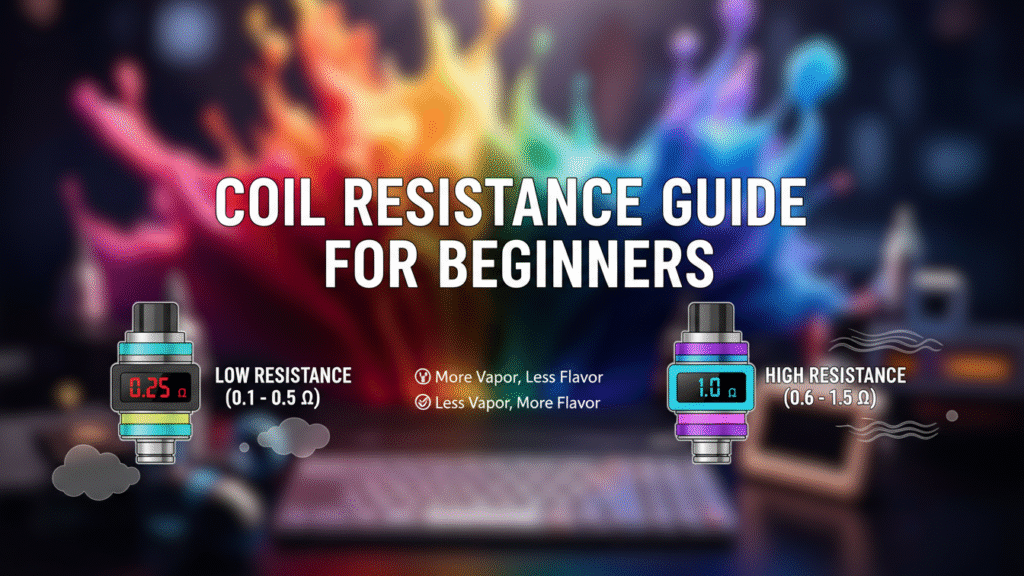
High Resistance Coils (0.8Ω – 1.4Ω)
High resistance coils heat slowly and use less power.
Best for:
-
Beginners
-
Pod systems
-
Nicotine salts
-
MTL (Mouth to Lung) vaping
Benefits:
-
Smooth hits
-
Less vapour
-
Better battery life
-
Lower risk of burnt coils
Low Resistance Coils (0.7Ω and below)
Low resistance coils heat faster and use more power.
Best for:
-
Experienced users
-
Sub-ohm devices
-
Freebase nicotine
-
DTL (Direct to Lung) vaping
Benefits:
-
Bigger clouds
-
Stronger flavour
-
More vapour production
Difference Between 1.2 Ohm and 0.7 Ohm Coils
1.2Ω coil
-
Lower wattage
-
Smooth inhale
-
Ideal for nicotine salts
-
Beginner-friendly
0.7Ω coil
-
Higher wattage
-
More vapour
-
Stronger flavour
-
Better for freebase nicotine
If you are a beginner, 1.0Ω or 1.2Ω coils are safer and easier to manage.
MTL vs DTL Coils Explained
-
MTL coils → High resistance (0.8Ω+)
-
DTL coils → Low resistance (0.7Ω or less)
Using the wrong coil type can cause:
-
Harsh throat hits
-
Coil burning
-
Nicotine overdose feeling
Always match your coil with your vaping style.
Which Coil Is Best for Nicotine Salts?
Nicotine salts work best with:
-
High resistance coils
-
Low wattage devices
-
Pod systems
Recommended range:
-
0.8Ω – 1.4Ω
Using nicotine salts in low resistance coils can cause harsh hits and coil damage.
Which Coil Is Best for Freebase Nicotine?
Freebase nicotine works best with:
-
Low resistance coils
-
Higher wattage devices
-
Sub-ohm kits
Recommended range:
-
0.7Ω or lower
Freebase nicotine allows better flavour and cloud production.
How Coil Resistance Affects Vapour and Flavour
-
Higher resistance → Less vapour, smoother hit
-
Lower resistance → More vapour, stronger flavour
If your goal is flavour, balanced resistance works best.
If your goal is cloud chasing, low resistance coils are better.
Common Beginner Mistakes
-
Using nicotine salts with sub-ohm coils
-
Running coils at higher wattage than recommended
-
Not priming coils before use
-
Choosing DTL coils as a beginner
These mistakes reduce coil life and ruin the vaping experience.
FAQs
What is a high resistance coil in vaping?
A coil above 0.8Ω that uses low power and is ideal for MTL vaping.
What is a low resistance coil in vaping?
A coil below 0.7Ω that produces more vapour and is used for DTL vaping.
Why does my coil burn quickly?
Common reasons include high wattage, wrong nicotine type, or not priming the coil.
Final Advice for Beginners
-
Start with high resistance coils
-
Use MTL vaping style
-
Pair with nicotine salts
-
Increase power or change coils only after experience
Choosing the right coil resistance improves safety, flavour, and coil lifespan.